
A lamp’s listed height tells you whether it fits a table. It does not tell you whether it lights a book or puts a bright source in someone’s view. Before shopping by inches, decide what the lamp needs to do and where the person will sit or stand. Test the table, shade and seating position together. A bedside reading light, a sofa lamp and a decorative console piece do not share one height rule. Understanding these basic decor rules frames lighting as part of the room rather than an isolated purchase.
Contents
- Is there one standard table-lamp height for every room?
- What should you measure before buying a lamp?
- How should a living-room lamp work beside a seat?
- What should a bedside lamp illuminate?
- How is a console or dining-room lamp different?
- What does the shade change?
- How can you make a final lamp-height decision?
Key takeaways
- No single height emerges from verified design standards.
- Record the table's top height, the available width and depth, and the position of the sofa, chair or bed.
- Beside a seat, separate reading light from decoration and check the view from each occupant position.
- Bedside selection requires trying both sitting and lying positions, switch access and the actual nightstand.
- Assess a console lamp from paths and nearby seats, including reflections and footprint, rather than a buffet number.
Judge the lamp with its actual table, shade and seat. Lighting decisions start with the object being lit and the person looking at it, not with a universal dimension from table to finial. Once the role is clear, the right height follows from the furniture and the view.
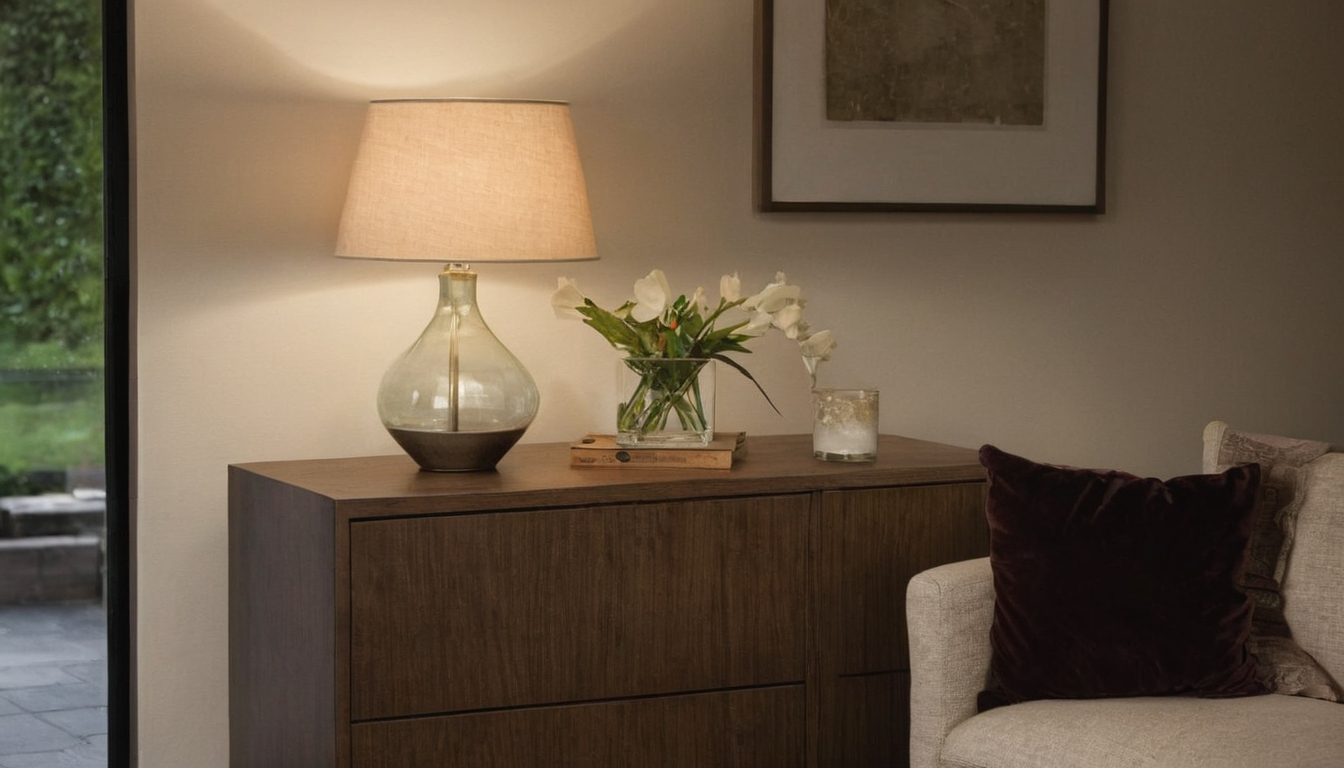
How to Choose the Right Table Lamp Height for Every Room in Your Home.
Is there one standard table-lamp height for every room?
No single height emerges from verified design standards. A short lamp on a high console may place its shade at the same level as a taller lamp on a low side table. The shade, bulb position and direction of light also change what a seated person sees. A catalogue range describes products but cannot settle how a lamp fits your room.
Measure the furniture you already own, then test a candidate’s total height in context. Ask where the top of the lamp will land relative to art, a window or shelving. More important, ask whether the intended reading surface receives useful light and whether the source shows from the seat. A physical sample or a temporary mock-up answers those questions more clearly than a formula based only on table height.
The U.S. Department of Justice publishes the 2010 ADA Standards for Accessible Design, which set accessible dining and work surfaces at 28 to 34 inches above the finish floor or ground (U.S. Department of Justice). These dimensions govern accessible architecture, not residential lamp selection. Applying an accessibility surface height as a universal lamp rule misreads the standard. Treat the table height as one variable among several: the seat, the task and the shade all shift the outcome.
Once you accept that no single number solves every room, the next step is knowing exactly what to measure before bringing a lamp home.
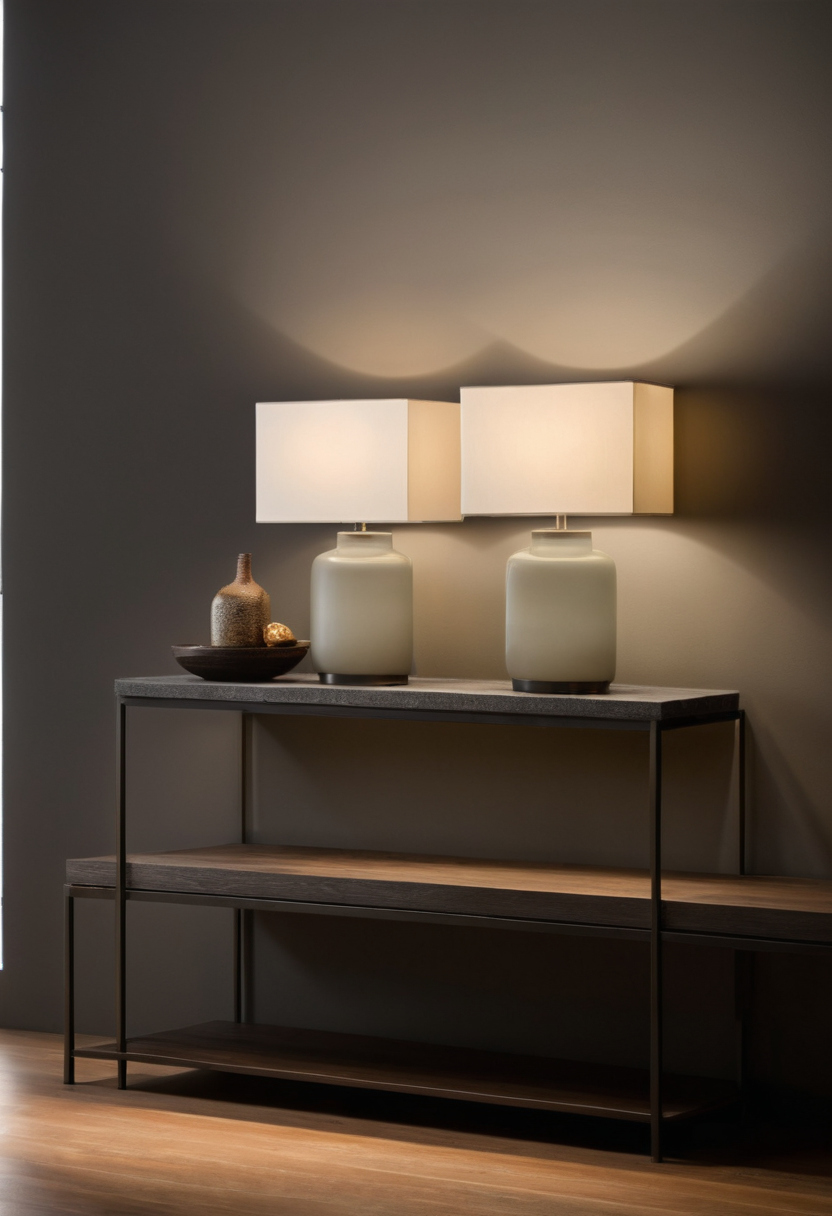
What is the standard table lamp height for most rooms.
What should you measure before buying a lamp?
Record the table’s top height, the available width and depth, and the position of the sofa, chair or bed. Note any shelf above the table and where the cord will run. For the lamp itself, obtain the overall height, the shade’s widest point, the location of its lower edge and the base’s footprint. These are product dimensions to check against your space, not ergonomic guarantees.
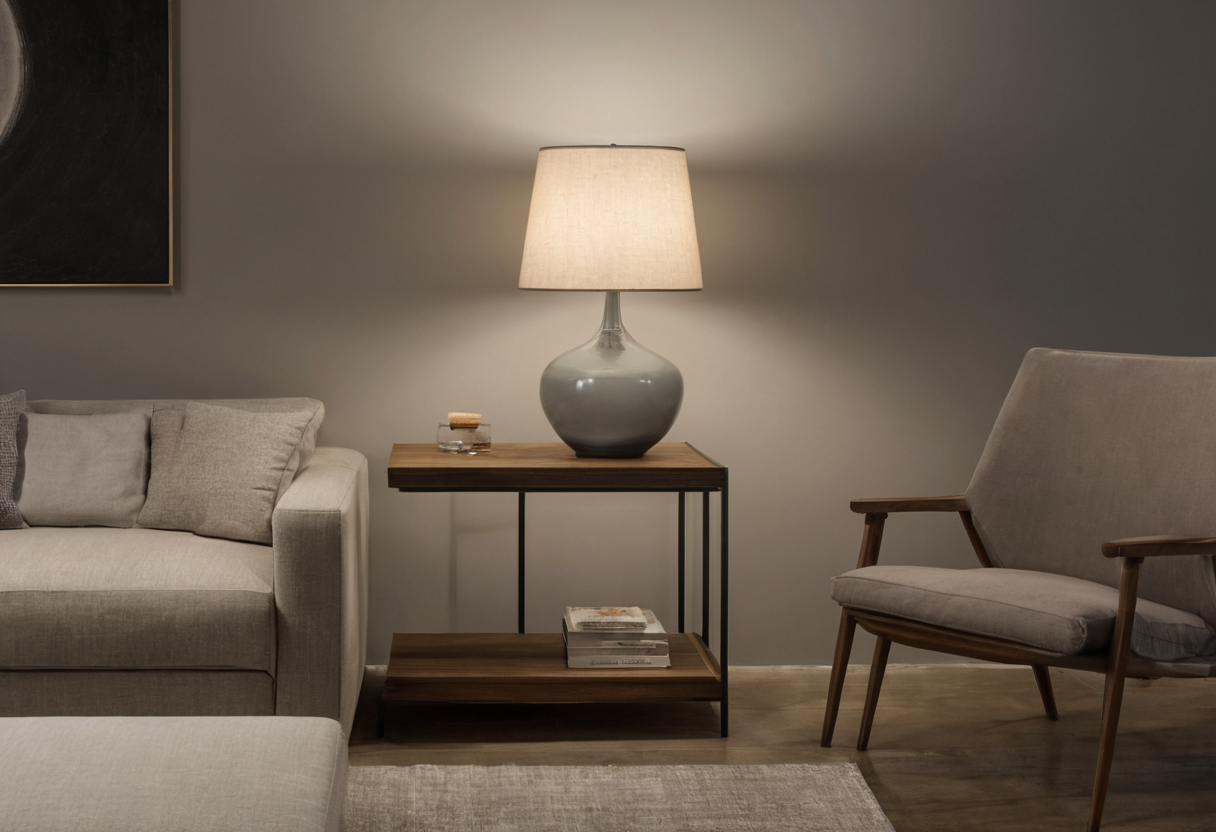
How do you calculate the correct lamp height from table dimensions.
- Table top height from the floor.
- Available surface width and depth for the base.
- Distance from the table to the primary seat.
- Overall lamp height including the finial.
- Shade width at its widest point and height.
- Base footprint to ensure stability.
Place a cardboard outline or a similar lamp at the proposed position. Sit where you normally sit. Can you see the bare bulb or a bright opening beneath the shade? Does the reading page or work surface get light where your hands will be? Does the shade block sightlines across the room? Repeat the check from the other seat if the lamp serves two people. This trial can rule out a poor fit before the look of the base becomes the only deciding factor.
The U.S. Environmental Protection Agency identifies furnishings among common indoor sources of volatile organic compounds and recommends increasing ventilation when using products that emit them indoors (U.S. Environmental Protection Agency). When evaluating new lamps, shades or finishes in a closed room, adequate airflow matters alongside visual fit. With measurements recorded and a mock-up tested, you can evaluate how the lamp performs in specific settings, starting with the living room.
How should a living-room lamp work beside a seat?
Beside a seat, separate reading light from decoration and check the view from each occupant position. Decide whether the lamp exists to read by, to help people navigate the room, or to add a visible pool of light. For reading, put a book in the usual spot and test the lamp with its intended shade and light source. Shift the lamp along the side table and watch whether your hand or chair back casts a shadow over the page. If the lamp is primarily decorative, check how the shade looks from the main seats and whether the light source draws unwanted attention.
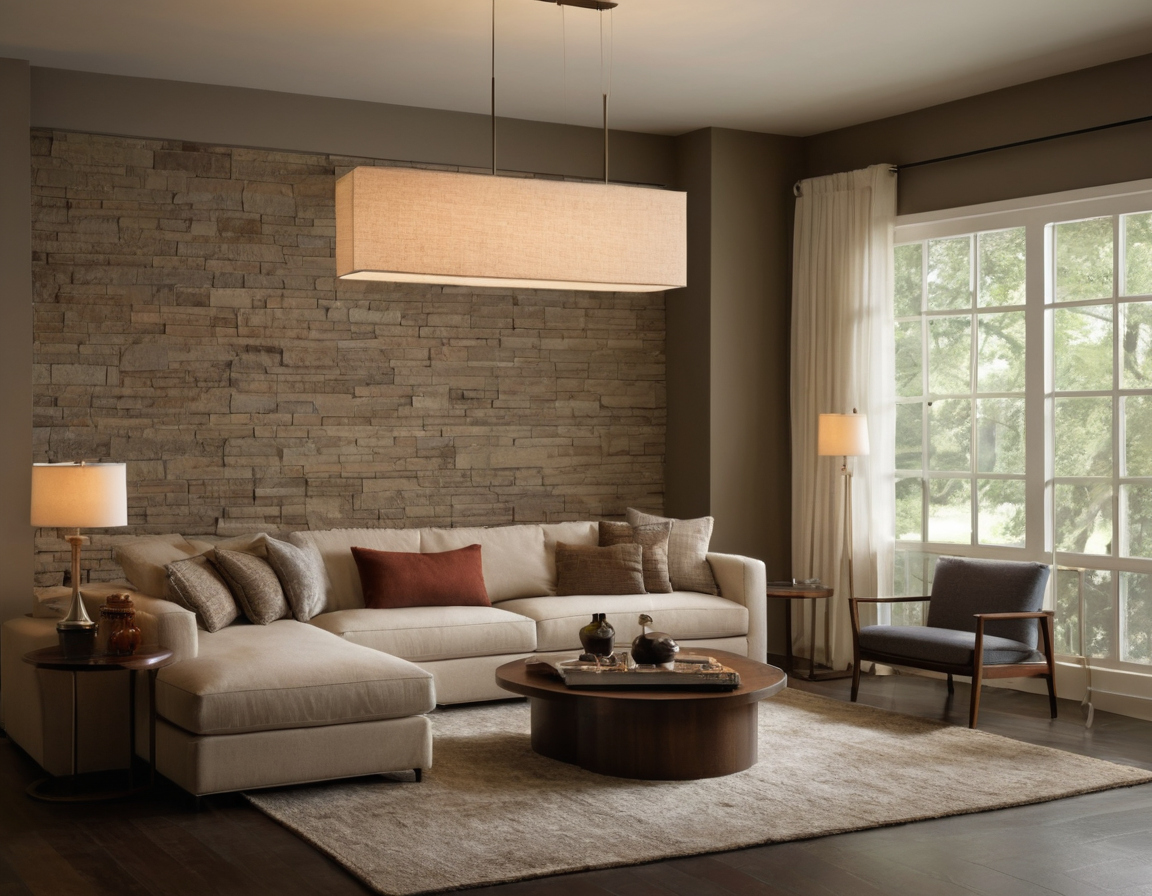
Start the calculation with the furniture.
Do not choose height from the sofa arm alone. A deep chair, a high side table and the position of a reader’s head all change the test. From one seat the shade may hide the bulb; from another, the source may be directly visible. Examine the actual field of view from every spot where someone might sit. A photograph of an empty room cannot show what every occupant sees after sitting down.
Functional accessories share this surface space. Items like candles or small objects often sit beside the lamp, so planning the arrangement requires checking both clearance and scale. Exploring useful home decor accents helps coordinate pieces that occupy the same side table without crowding the light. Once the living room arrangement is clear, the bedroom demands its own specific test.
What should a bedside lamp illuminate?
Bedside selection requires trying both sitting and lying positions, switch access and the actual nightstand. Try the lamp from the positions in which the bed is actually used. Sit up with a book or device, then lie down. Notice whether the shade hides the bright source in each position and whether the page gets light without an awkward reach to the switch. If another person shares the bed, repeat the test on their side. A lamp that works from one pillow position may not suit both readers.
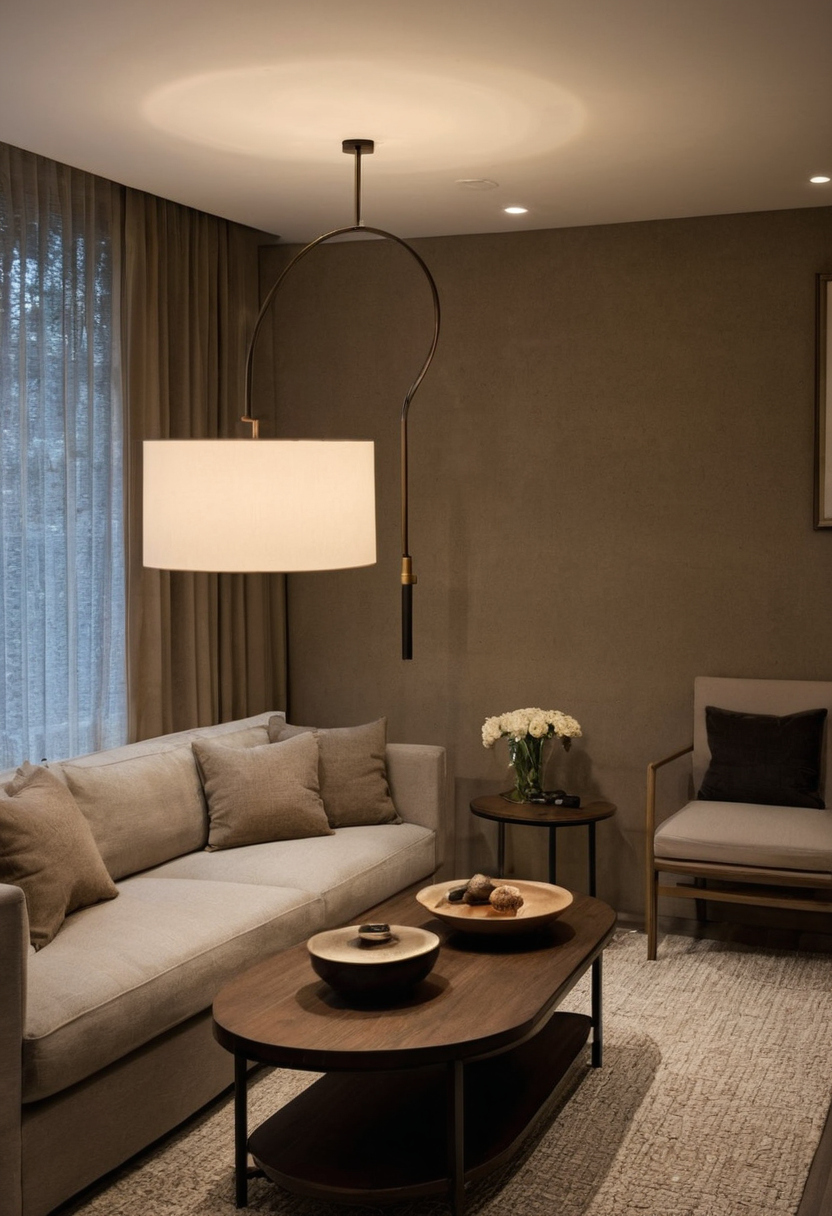
What table lamp height works best in a living room.
Check the relation between the nightstand and the mattress, not only the height of the lamp. A recessed or raised tabletop changes where the shade sits relative to the reader. Consider access to the switch and a stable place for the base alongside water, books or other items. These are practical fit checks; they are not a claim that a specific height prevents eye strain or improves sleep.
The 2010 ADA Standards specify a 30 by 48 inch clear floor or ground space for wheelchair positioning in accessible design (U.S. Department of Justice). While this requirement addresses accessible architecture rather than private bedroom styling, it illustrates why spatial planning around furniture must account for the user’s physical approach. In a bedroom, ensuring the nightstand and lamp base leave adequate room to move safely matters just as much as the light output. After confirming the bedside fit, consider how lamps behave in transitional spaces.
How is a console or dining-room lamp different?
Assess a console lamp from paths and nearby seats, including reflections and footprint, rather than a buffet number. On a console, the lamp may define a corner rather than direct light onto a page. Test it from the main path through the room and from nearby seats. Check whether the shade blocks art, a mirror or a window and whether the light source reflects into the viewer’s eyes. If the lamp sits near a dining table, sit at the table and look across it, not only at the console from the doorway.
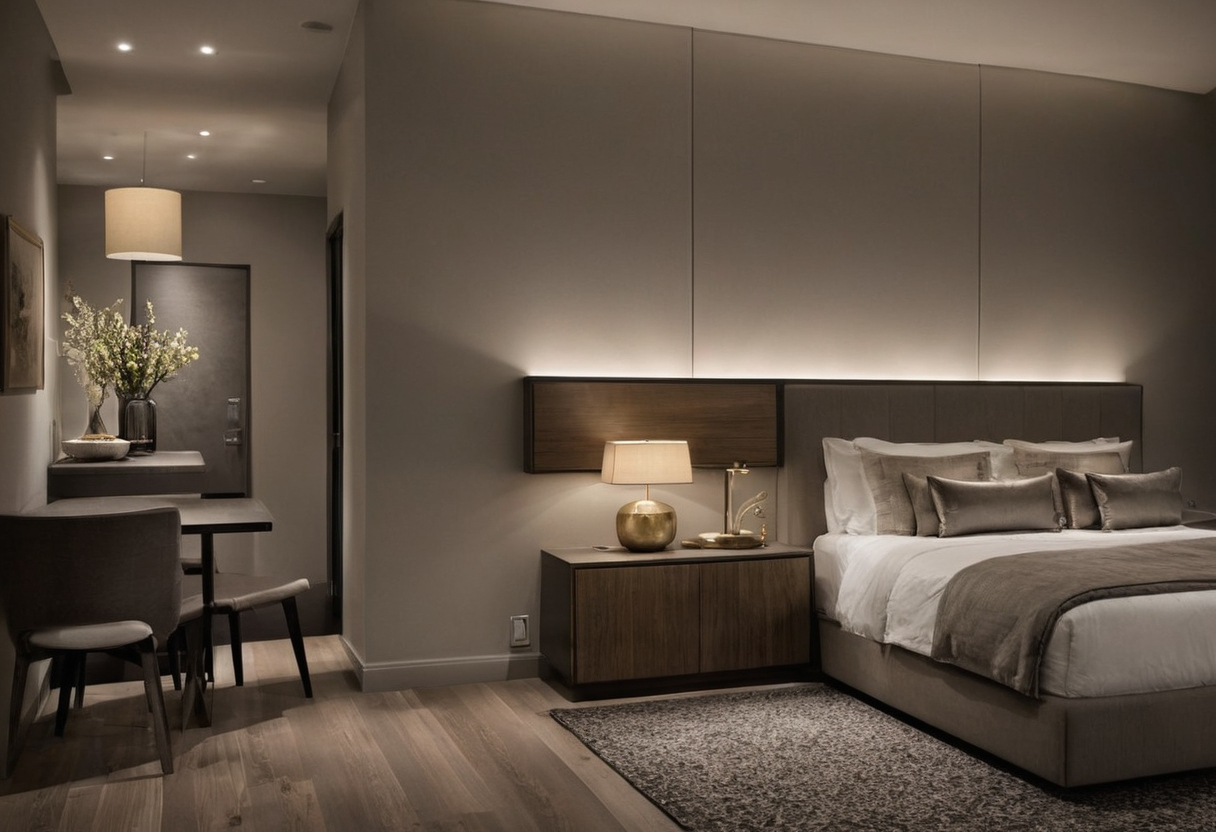
How tall should a bedside table lamp be for reading.
There is no reason to transfer a bedside height to this setting. A narrow console may require a smaller base for space and stability even if the shade could be taller. Mark the available footprint with paper and check that objects remain usable around it. The final proportion is a visual judgment made in the room.
The light source inside the lamp affects long-term performance. According to ENERGY STAR, qualified LED lighting uses at least 75 percent less energy and lasts up to 25 times longer than incandescent lighting (ENERGY STAR). Choosing an efficient source matters for console lamps left on during evening hours or in dining areas used frequently. Because LEDs alter heat output and bulb size, they also influence which shades fit safely. That relationship between bulb and shade leads directly to the next consideration.
What does the shade change?
The actual shade controls light direction and bright-source visibility; test with the intended light source. A shade changes both the lamp’s silhouette and the direction in which the light leaves it. Try the actual shade rather than judging a bare base under shop lighting. From the usual seat, look for a visible bright source below or above the shade. Then look at the book, side table or nearby wall. If the shade gives a pleasant glow but leaves the task dark, you may be choosing an accent light rather than task lighting.
A larger shade is not automatically better, and a small shade is not automatically wrong. Check the shade with the intended light source and the room’s other lights switched to the pattern you normally use. A showroom with every ceiling light on can hide a problem visible at home in the evening. The material, opacity and shape determine how much light reaches the task surface versus how much diffuses into the room. Once the shade matches the bulb and the task, the remaining variables fall into place.
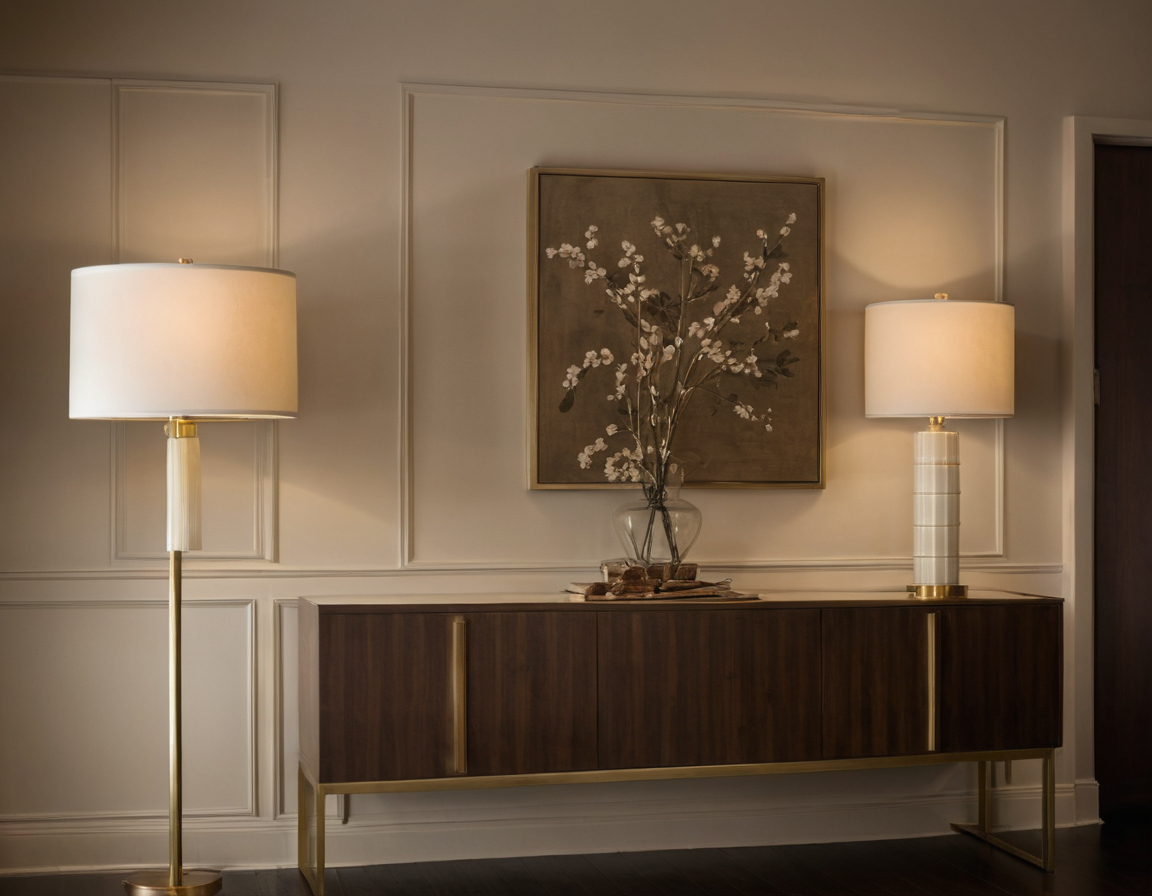
What are the proportional rules for dining room buffet lamps.
How can you make a final lamp-height decision?
Use a short in-room comparison of role, dimensions, task and view to choose the lamp. Rather than searching for a universal formula, rely on a structured checklist tailored to the room. When you have explored various home decor ideas, applying a consistent evaluation method ensures the lighting supports the broader design instead of competing with it.
- Name the lamp’s primary role: reading, a work surface, general light or decoration.
- Measure the table and the candidate lamp, including the base and shade, then make a simple outline in the room.
- Test from every seat the lamp serves. Look at the task surface and check for a bright source in the field of view.
- Change one thing at a time: position, shade, light source or lamp height. Note which change improves the actual task.
- Check switch access, cord route and clearance around the base before purchase.
Choose the lamp whose light and scale work in the room. Its height is a result of that test. No fixed number can replace the combination of table, shade, seat, task and view. By treating height as an outcome of the room’s geometry rather than a starting rule, you select lighting that genuinely serves the way the space is used.
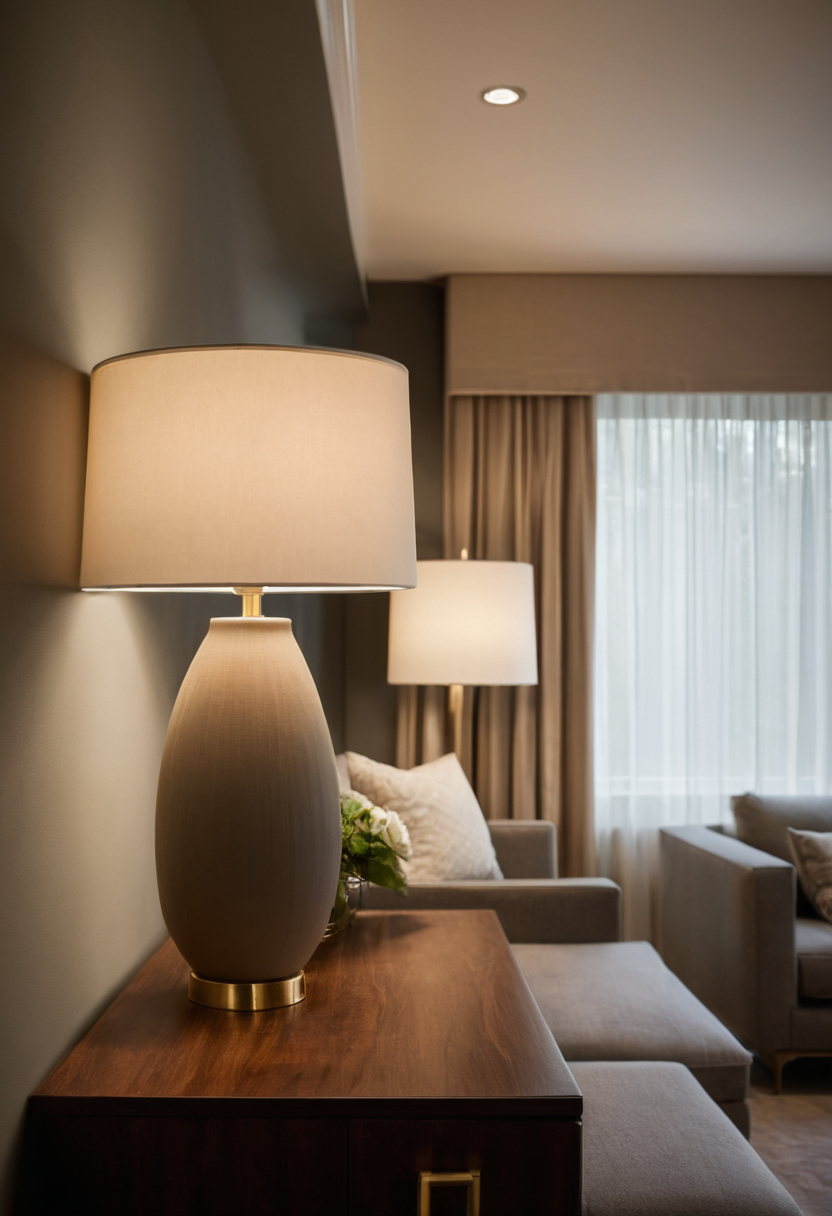
How do you match lampshade size to lamp base height.
For more on this topic, see other guides on this site.